


The history of Padel
How did padel come about and who were the people behind it?
A Mexican businessman and lawyer, of Spanish origin, Enrique Corcuera is believed to be the man behind the invention of what we now call Padel.
Enrique Corcuera
Enrique Corcuera and his wife Viviana Delavedova were very fond of racquet sports and built a squash court at their vacation home in Acapulco called Las Brisas . In 1969 they rebuilt it into a track surrounded by walls and with a net in between. They wanted to find a game that was social, fun and yet advanced, but not as physically challenging as Enrique got older. Enrique also helped introduce padel bats and padel balls, which were easier to handle than traditional tennis equipment.
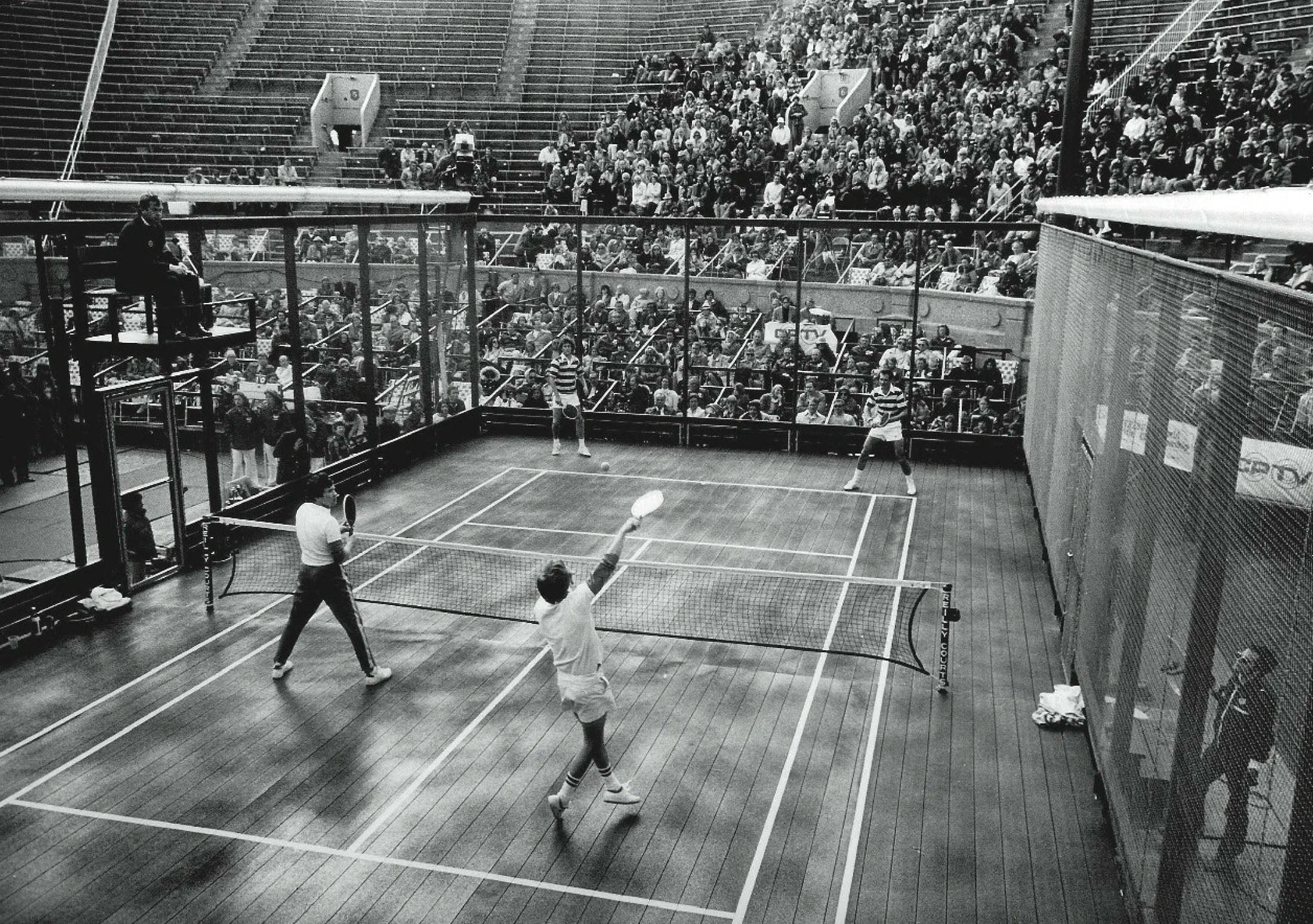
It is said that Enrique was inspired by Platform Tennis, squash and tennis. They named their version Paddle Corcuera. Platform tennis had the court fenced off, possibly because it was originally played on coastal cruise ships, so as not to shoot the balls into the sea. When they were built on land, they had roughly the same structure. It is said that Enrique put up walls to prevent the balls from ending up inside the neighbour's house. Some believe that he didn't have room for a tennis court on his land, and therefore chose to build a smaller one, inventing a new game in the process. The couple played with family, friends and acquaintances from all over the world.
Viviana Delavedova
Originally from Argentina, Viviana had previously been in a relationship with former president Fernando de la Rua . She became MISS Argentina in 1964. The couple had many prominent guests, including The Shah of Iran , Henry Kissinger , Plácido Domingo and Frank Sinatra .
But one guest in particular was significant for the development of Padel in Europe.
Alfonso of Hohenlohe-Langenburg (Prince Alfonso Maximiliano)
Enrique's Spanish friend Alfonso of Hohenlohe-Langenburg fell in love with Enrique's newly invented game and in 1974 decided to build the first two courts in Spain in a tennis club in Marbella. He modified the court and the game so that it became more competitive as the padel we recognize today. Tournaments were held with guests from his exclusive hotel on the Costa del Sol, which attracted many prominent and famous participants. It is not known whether it was their consumption in the bar and the attraction of spectators that sparked people's interest in Padel, but it inspired other hotels to build similar courts and thus Padel began to grow in Spain. It was the starting point for the growth of Padel in Spain over 25 years.
Julio Menditegui
Alongside Alfonso in Spain, in the 80s Padel began to develop massively in Argentina, imported by Julio Menditengui in 1975. Julio was a member of Alfonso's tennis club in Marbella (Marbella Club). He was so excited that he went home with the mission that padel should become big in Argentina.
It is also believed that Viviana's Argentinian roots had an impact on the spread.
However, with Spain's more solid economy and support for padel, they overtook Argentina in both the number of courts and players. Today, most top-ranked tournaments continue to be dominated by Spanish and Argentinian players of both sexes.
Padel in Spain
It is believed that Enrique Corcuera went home to Spain and helped introduce padel in his homeland. The Spanish people fell in love with the sport and it began to spread throughout Spain. Padel courts were built in parks and recreational areas and people of all ages started playing padel.
As padel grew in popularity it began to gain recognition as a legitimate sport and in 1992 the International Padel Federation was founded. The first World Championship was held in 1992. This was the beginning of the Padel Pro Tour, which continued until 2012. Since then, many tournaments and Leagues have been added.
Padel in Argentina
It was a difficult task Julio Menditengui had set himself in the 60s when he returned home from the Marbella Club. Until 1982, there were only 12 courses in Argentina. But after that it started to go fast. Club San Jorge in San Isidro built 14 padel courts, demand increased and more centers appeared. It also now became a sport for the ordinary exerciser and not just for wealthy players and celebrities. Padel sport also became more viewer-friendly when Jorge Galeotti invented a transportable glass court, which increased the quality and possibilities for TV transmissions. 1 In 1991, Padel was named the second most popular sport after soccer in Argentina.
Padel in the rest of the world
Today, Padel is played all over the world by millions of happy players. It is a fast-paced, exciting sport that requires skill, strategy and agility. Despite padel's short history, it has become the sport that is loved by most across age and skill levels.
All over the world, the number of tournaments and leagues has increased and many professional players have been added. One of the factors for padel's popularity is that the smaller courts and simple rules make it easier to learn for people of all ages and levels. Another factor is that it is a very social sport where you play two by two. Padel has developed many sophisticated techniques since its inception and many skilled players have also appeared in the world. But despite the growth and success of padel, it has managed to stay true to Enrique's original idea that it should be fun and entertaining.
Today, padel is considered to be the fastest growing sport in the world.
Spain and Argentina were the first countries where Padel developed to be the most popular sport after football. They were followed by several South American countries, Asia, Africa and Europe.
In Sweden, the Padel wave really took off and there was an explosive growth in the number of centers and courts as well as players during the corona crisis. Former soccer star Zlatan Ibrahimovic built his own chain of padel halls, Padel Zenter. It has subsequently turned out that many centers in Sweden have had to close, which is attributed to the too rapid growth.

